

Between 2006 and 2013 the number of Hungarian high school graduates applying to British universities increased significantly, by nearly 2.7-fold, while other Visegrad countries were characterized by much lower growth rates. Besides, the research of IEER examining the prospects for further studies also reveals that regional disparities in further education are discernible within Hungary. Children from the underdeveloped Northern and Great Plains regions usually don't apply for universities in Budapest or abroad, whereas in the region of Central Hungary students most often choose the most prestigious universities of Budapest. The study was conducted on graduating students at thirty Hungarian state high schools; the results are based on 704 responses.
Read more >>>
The business expectations and investment activity of small and medium-sized enterprises (SMEs) has picked up slightly in the last quarter. Based on the results of the IEER SME survey in April the business climate index increased slightly compared to the previous three months. Compared to January 2014, data from the Uncertainty Index was also higher, that is, the current and expected business situation with regards to the diversity of opinions slightly increased among SMEs. But this figure is still relatively low compared to the results of the previous survey. In view of the results and expected staff changes, there is an overall positive change in employment growth; at the same time, investment activity is decreasing.
Read more >>>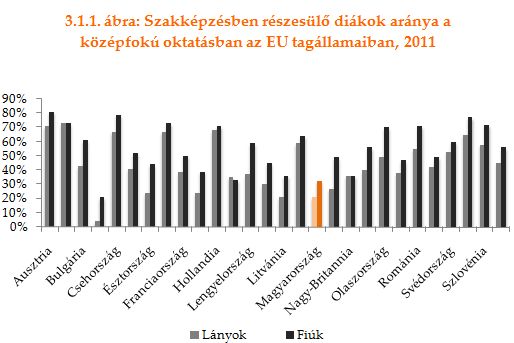
How can we characterize the Hungarian vocational training, what can we interpret the trends? How can we describe the students in the vocational schools and what awaits them on the labour market? These questions were analyzed by the Institute for Economic and Enterprise Research by summarizing the facts and data referring to the vocational training from the last 10-15 years.
Read more >>>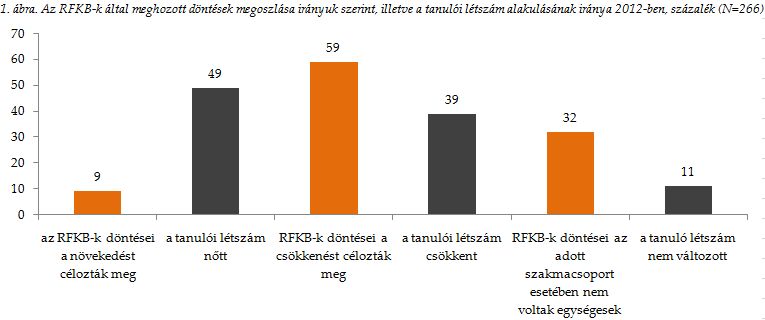
It is a very important requirement for skills training in the public education system that students obtain the skills and trades necessary for long-term access to the labor market. One important condition is that the schism between trades obtained at vocational school and the needs of the labor market be narrowed. In order to facilitate this goal, the Hungarian government developed a system in which the Regional Development and Training Committees (RDTCs) between 2008 and 2012 proposed a vocational training school structure on a regional basis. The IEER latest analysis examines how training schools responded to the proposals of the RDTCs education structure, and how proposals have been taken into account when making enrollment decisions. A key finding of this analysis is that RDTCs decisions have only minor influence on the future development of student numbers.
Read more >>>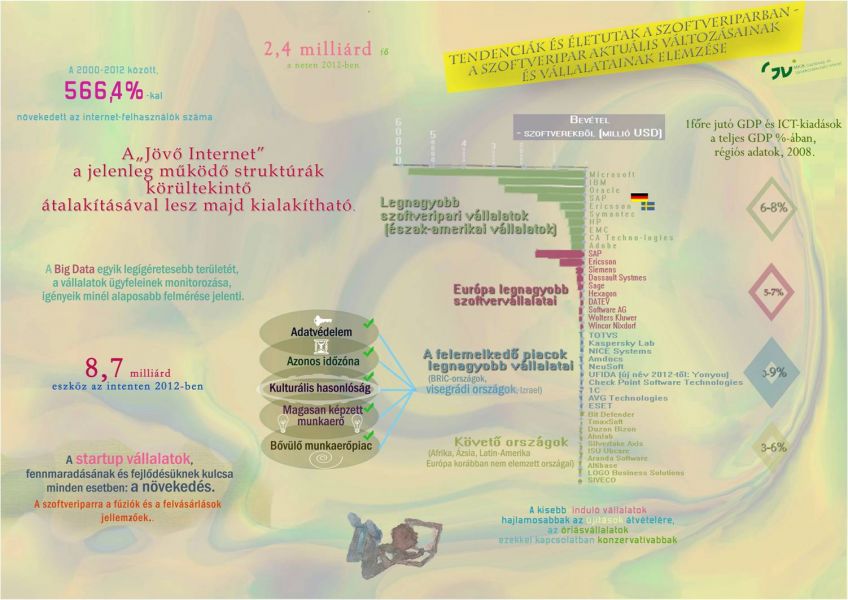
Today's economic and social life tends to be fundamentally affected by the development and products of software industry. In the era of "information society", the changes and movements of this field have significant impacts on many segments of the society. In our study, one of our main purposes is to reveal the most important tendencies of the software industry recently. We also intend to detect the changes orienting the most probable future developments of this market. In order to complete our purposes, we concentrate our work not only on global and local trends, but we also introduce the histories and current characteristics of some typical software companies of our time.
On the following link an English summary of the paper can be downloaded.
Read more >>>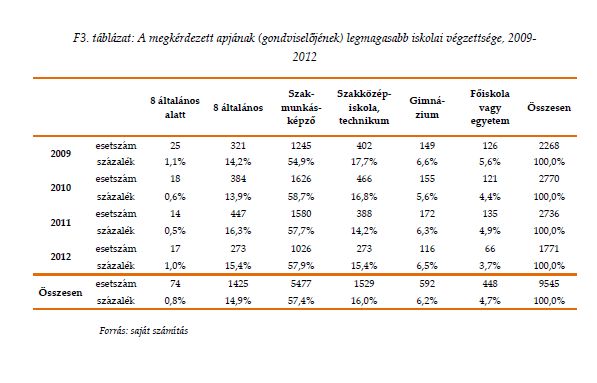
The aim of the following paper is to unfold some factors that affect the young skilled workers’ chances of getting a job, doing further studies and using the learned profession at work or school. The survey examined the start of the labour market career of young skilled workers who have finished trade school or vocational school in the previous year. The survey focused on the question whether the skilled entrants could or wanted to enter the labour market in a 9-months long period after finishing trade school or vocational school. The results are based on a joint database of yearly databases between 2009 and 2012 that contains data of 10,104 young skilled workers. The results show that higher educated parents’ children have better chances on the labour market and unemployed fathers’ children encounter a higher risk of getting unemployed. The chance of getting a job or using the learned profession in a job or further studies is increased by choosing the profession matching the personal interests, by fulfilling a traineeship at a company, good scholastic records, knowledge of foreign languages and getting a high-school graduation. Further studying results in tangible wage premiums in the short run and in a labour market position stabilized by the skills of getting new knowledge in the long run. As a conclusion we believe that acquiring good general knowledge and studying skills is very important for young skilled workers: the continuously renewing requirements of the labour market and the frequent change of jobs and professions make lifelong learning necessary, thus improving flexibility and skills of knowledge renewal became an important task of the vocational training system.
Read more >>>
The results of the latest SME Outlook survey reveal more favourable expectations compared to the previous quarter: the SME Outlook Business Climate Index increased from 2 points to 9 points, surpassing the level of January 2013 (7 points). The value of the SME Outlook Uncertainty Index compared to the previous quarter is similar, it increased from 31 to 33 points. These values are notably lower than we found earlier in the course of the SME Outlook Business Climate Survey. This result implies that there is a decrease in the diversity of opinions on views toward the current and expected business situation of enterprises, however the perceptions of the trends are still not clear or uniform within the SMEs.
Read more >>>
The newest wave of the joint research project by the National Labour Office and the HCCI Institute for Economic and Enterprise Research entitled “Short-term Labour Market Forecast” took place in September and October of 2013. During the survey managers of 7,108 companies were asked about current and expected labour demand. The results can be considered as representative both geographically and by economic sector, as well as by company size. The following is a short presentation of the results compared with other data sources and relevant estimates.
After three years a positive change can be seen in the subjective business situation assessment of companies – the index increased by five percentage points in a year. In the autumn of 2013 the rate of companies that were considered to be in a favourable business situation was 16 percent points higher than those who had a negative outlook. The business outlook for 2014 is more optimistic than at any time in recent years – the index is near 24 points. This optimism can be traced back to the expectations of the companies in the services sector, those within the areas of finance, and export-oriented companies.
Read more >>>
In the third quarter of 2013 the small and medium enterprises show a positive image about their current business situation. All of the indicators referring to the current situation showed an increase compared to the previous period. In contrast, the expectations for the future indicate a negative outlook, as all of the forecasting indicators fell. These opposing effects resulted a decrease of the SME Business Climate Index. The Uncertainty Index also decreased comparing to the previous period, what means that the diversity of opinions among SMEs has reduced the on the previous quarter.
On the following link an English summary of the paper can be downloaded.
Read more >>>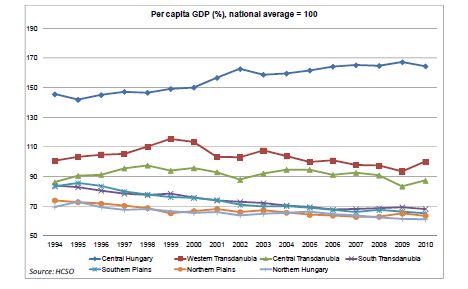
For the complete evaluation of the social and economic trends of the past 20 years, we should know more about the processes that took place after the transition and how these affected the regions of Hungary. What happened in a landscape, region or micro-region in the past 20-23 years. What changed about the job opportunities, income of the local people, how did the structure of the industry and agriculture change, catching up or falling behind characterize the local economies. The latest research paper of MKIK GVI (The socio-economic profiles of the Hungarian regions) provides basic information to anyone interested in these issues and uses the most important social and economic indicators to depict the socio-economic situation of the Hungarian regions and counties and their path in the development since the transition to the present.
On the following link an English summary of the paper can be downloaded.
Read more >>>