
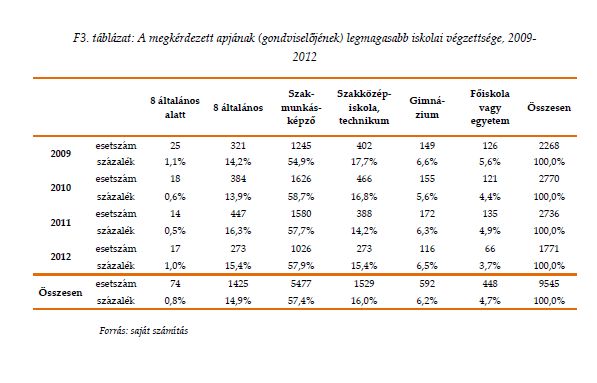
The aim of the following paper is to unfold some factors that affect the young skilled workers’ chances of getting a job, doing further studies and using the learned profession at work or school. The survey examined the start of the labour market career of young skilled workers who have finished trade school or vocational school in the previous year. The survey focused on the question whether the skilled entrants could or wanted to enter the labour market in a 9-months long period after finishing trade school or vocational school. The results are based on a joint database of yearly databases between 2009 and 2012 that contains data of 10,104 young skilled workers. The results show that higher educated parents’ children have better chances on the labour market and unemployed fathers’ children encounter a higher risk of getting unemployed. The chance of getting a job or using the learned profession in a job or further studies is increased by choosing the profession matching the personal interests, by fulfilling a traineeship at a company, good scholastic records, knowledge of foreign languages and getting a high-school graduation. Further studying results in tangible wage premiums in the short run and in a labour market position stabilized by the skills of getting new knowledge in the long run. As a conclusion we believe that acquiring good general knowledge and studying skills is very important for young skilled workers: the continuously renewing requirements of the labour market and the frequent change of jobs and professions make lifelong learning necessary, thus improving flexibility and skills of knowledge renewal became an important task of the vocational training system.